
FAMILY-OWNED IN MATTAWAN • SERVING SOUTHWEST MICHIGAN
Greenshield installs open-cell and closed-cell spray foam for homes, additions, crawlspaces, rim joists, garages and pole barns. We inspect the space, explain the material options and provide a written estimate with the proposed thickness and preparation included.
Family-owned since 2016 • Licensed & insured • Free estimates
Tell us what you want insulated, the property location and whether the space will be heated. Include approximate measurements and any existing insulation or moisture concerns.
Prefer to talk through the project? Call (269) 743-3121.
Both types can provide insulation and air sealing when installed at the thickness specified for the product. The better choice depends on cavity depth, moisture conditions, the building assembly and how the space will be used.
Open-cell foam is lighter and expands to fill irregular cavities. It generally costs less than closed-cell foam for comparable projects, but provides less insulation value per inch and allows more water vapor to pass through.
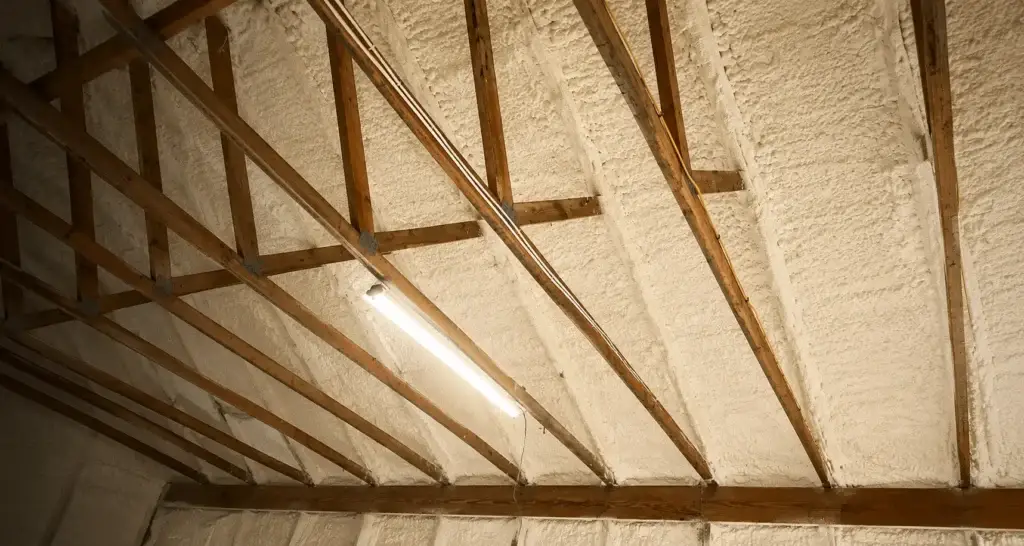
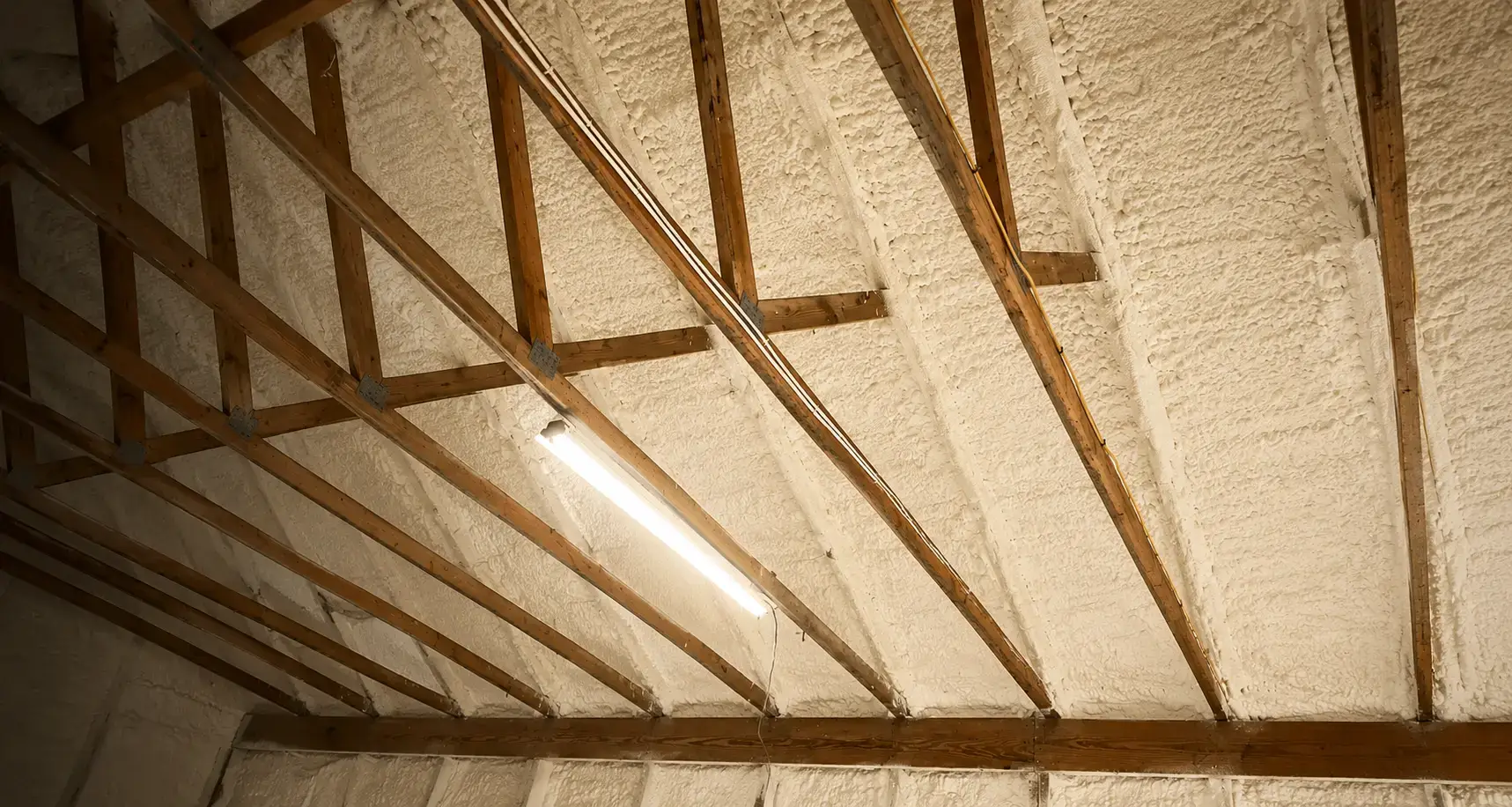
It may suit framed walls, additions and some roofline assemblies. Roofline applications need a plan for moisture control and drying; open-cell foam is not a substitute for waterproofing.
Closed-cell foam is denser and provides more insulation value per inch. At the specified thickness, some products also function as vapor retarders. It can be useful where space is limited or moisture control is an important part of the design.
Common applications include rim joists, crawlspace walls, pole barns and certain wall or roof assemblies. Existing leaks and drainage problems still need separate repairs.
We specify the foam type and installed thickness for your project. There is no single thickness or R-value that fits every wall, roof or crawlspace.
Cold floors and drafts may start around the rim joist, sill plate or crawlspace enclosure. We assess access, existing insulation and moisture conditions before selecting the insulation location. Learn about crawlspace and rim-joist insulation.
Open framing allows us to evaluate cavity depth, penetrations and coverage before drywall. We coordinate the proposed insulation scope with the assembly and required protective finishes.
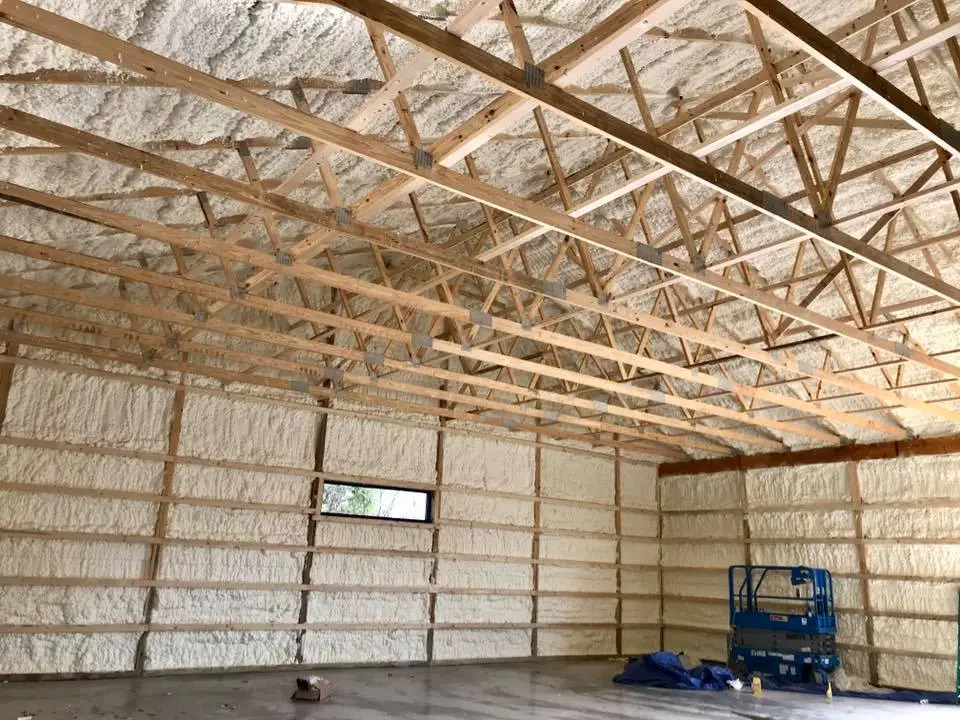
The right approach depends on whether the building will be heated, its framing and roof design, and how moisture will be managed. See our pole barn insulation options.
Spray foam may suit a planned roofline assembly or specific air-sealing details. For many vented attics, air sealing and blown-in cellulose insulation can be the more practical choice. We explain the options before recommending a scope.
If old insulation blocks the work or is unsuitable to leave in place, we can discuss insulation removal as part of the estimate. Foam does not repair roof leaks, structural damage or drainage problems.
Spray foam pricing depends on the foam type, installed thickness, area, access and preparation. Removal, masking, difficult framing and any required protective coatings can also affect the scope.
For estimating, a board foot is one square foot covered one inch thick. That means two proposals for the same floor area can involve very different quantities of foam. Compare the material, thickness, surfaces included and preparation—not just the total square footage.
Greenshield provides a written project estimate. Tell us the approximate area, whether framing is open, and how you plan to use the space so we can discuss the right next step.
View more Greenshield insulation project photos and customer reviews. We serve Kalamazoo, Portage, Mattawan and nearby Southwest Michigan communities. We also install spray foam in Allegan County, generally within about 40 miles of our base.
Professional spray foam installation requires controlled application conditions, ventilation and appropriate protective equipment. Before scheduling, confirm what must be moved or protected, where access is needed, and when occupants and pets must leave and may return.
Re-entry and re-occupancy requirements depend on the exact product and installation conditions. Follow the manufacturer’s instructions and the project-specific guidance provided for your job; a fixed waiting period should not be assumed for every foam.
The quote should also make clear whether any required thermal barrier, ignition barrier or protective coating is included or will be completed separately.
No. Spray foam can be useful where air sealing, limited cavity depth or irregular framing matter. Cellulose can be a practical choice for vented attic floors and suitable enclosed walls; fiberglass may fit accessible framing. We recommend materials around the building and the work needed.
Foam can be part of an air and moisture-control strategy, but it is not a repair for water entry or existing mold. Leaks, drainage, ground moisture and ventilation need to be evaluated separately before insulation covers the area.
Plan occupancy and pet arrangements before installation. Access must be restricted during application, and return timing must follow the product manufacturer’s requirements and the job’s ventilation and cleanup plan.
The thickness depends on the product’s tested properties, the assembly, project goals and applicable requirements. Your estimate should state the proposed foam type and thickness rather than treating all spray foam as interchangeable.
Yes. Share the property location, area to be insulated, approximate measurements and any access concerns. We will follow up to discuss the project and arrange a free estimate.
 Call Now