
Sidewall Insulation in Kalamazoo & Southwest Michigan
Cold exterior walls or rooms that are hard to keep comfortable? Greenshield installs drill-and-fill cellulose insulation in suitable existing wall cavities. Our Mattawan-based family business serves Kalamazoo, Portage, Paw Paw and nearby Southwest Michigan communities.
Family-owned since 2016 · Free estimates · 50+ years combined experience
Tell us your town, which rooms feel cold, your siding type and anything you know about the existing wall insulation. Approximate home age and photos can help us prepare for your free estimate.
A Local Team for Existing-Home Wall Insulation
Greenshield is a family-owned insulation contractor based in Mattawan. We assess your wall construction, existing insulation and access before recommending drill-and-fill cellulose. You receive a project-specific scope covering the areas to insulate and how the access openings will be handled.
We serve Kalamazoo, Portage, Mattawan, Paw Paw and surrounding communities generally within about 40 miles of our home base.
Cold Walls and Drafty Rooms May Point to Missing Insulation
Cold exterior walls, uneven room temperatures and little or no existing wall insulation can make sidewall insulation worth evaluating. Those symptoms can also have other causes, so we inspect the relevant areas before recommending work.
If heat loss appears to involve the ceiling or areas below the floor, we can also discuss attic insulation or crawlspace insulation. The goal is to match the work to your home’s needs.
What Is Sidewall Insulation?
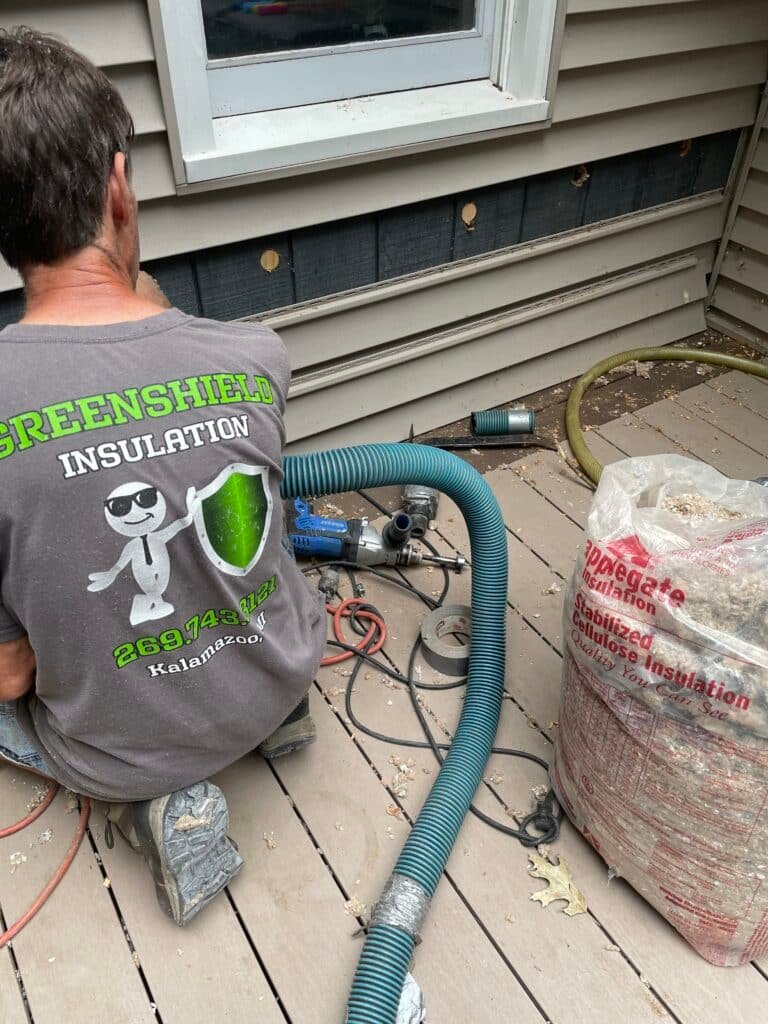
Sidewall insulation fills suitable cavities within exterior walls. For existing homes, this is often called drill-and-fill insulation, blown-in wall insulation or retrofit wall insulation.
Greenshield uses cellulose for this service. We create access openings, install the insulation in accessible cavities and close the openings according to the agreed scope. The access method depends on the siding, wall construction and existing conditions.
This approach can avoid removing entire sections of interior drywall. Before work begins, we discuss access, siding handling and any patching or finish work that will be needed.
Is Your Home a Good Candidate for Sidewall Insulation?
Retrofit wall insulation can help improve comfort and energy efficiency in older homes across Southwest Michigan. However, before recommending this project, we need to inspect the wall assembly to ensure it’s a good fit for your home.
Here are some factors to consider:
- Empty exterior wall cavities
- Little or deteriorated existing insulation
- Cold exterior walls during Michigan winters
- Bedrooms or additions with uneven temperatures
- Noticeable drafts near walls, outlets, or trim
- Excessive outdoor noise
- Siding that can be accessed appropriately
- Plaster or finished interior walls you prefer not to remove
Highlighted Note:
Not every wall should be filled without inspection. Moisture problems, active leaks, knob-and-tube wiring, unusual framing, and certain wall assemblies may require additional evaluation first.
How Drill-and-Fill Wall Insulation Works
Step 1: Assess
Review the wall construction, existing insulation, access and any conditions needing attention.
Step 2: Plan Access
Agree on the installation areas, access openings and how siding or finishes will be handled.
Step 3: Install Cellulose
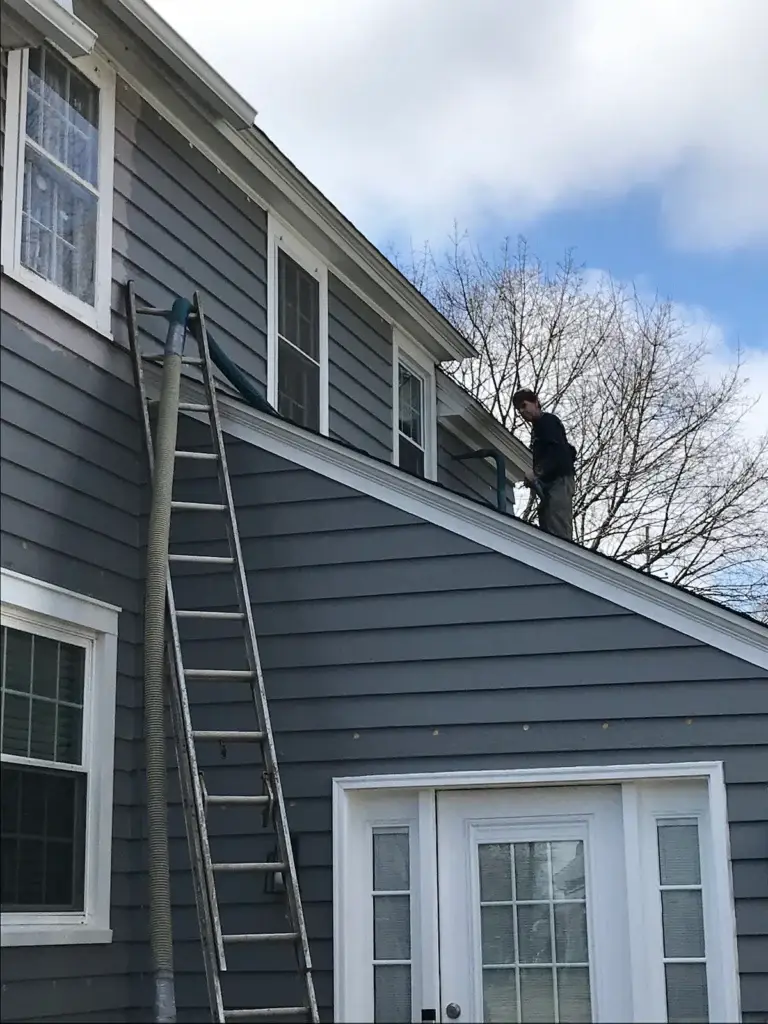
Create the planned access openings and install cellulose in suitable, accessible wall cavities.
Step 4: Close & Review
Close access openings according to the scope, clean up and review the completed work.
Why Cellulose Works Well in Existing Walls
Professionally installed blown-in cellulose insulation is an excellent choice for retrofit wall applications. It can easily conform to irregularities and fill accessible wall cavities effectively. This insulation not only enhances thermal resistance but also provides some sound control benefits.
Cellulose is typically made with a high percentage of recycled paper and treated to resist fire, making it an eco-friendly option. While it adds great insulation value, it’s important to note that it is not fireproof, waterproof, or mold-proof. Similarly, it doesn’t guarantee complete soundproofing, but it does help reduce noise transmission.
Unlike loose-fill attic insulation, which is simply spread out, properly installed cellulose in walls is carefully blown into the cavities for maximum coverage and efficiency. Instead of discussing a precise R-value, it’s more accurate to consider factors like cavity depth, density, existing materials, and installation conditions, all of which will influence performance.
Sidewall Insulation Questions
How much does drill-and-fill wall insulation cost?
The estimate depends on the wall area, number of stories, siding and access, existing insulation and preparation or finish work. Home floor area alone is not enough to price the project accurately. Request a free estimate so we can review your home and the areas you want improved.
Will you need to remove my siding or drywall?
The access method depends on your home. Some wall assemblies allow access from the exterior, while others need a different approach. We discuss the openings, siding handling, patching and finish responsibilities before you approve the work.
Can walls with existing insulation be filled?
Existing insulation, framing and other obstructions can affect what is practical. We assess those conditions first. Not every wall cavity is suitable for additional cellulose.
Will this fix every draft or cold room?
Wall insulation can improve comfort where wall cavities lack insulation, but windows, air leaks, attic coverage and heating distribution can also contribute. We explain what the proposed wall work is intended to address without promising a fixed energy-saving percentage.
How long does the work take?
Timing depends on the installation area, access, siding and preparation. We discuss the expected schedule and any access you will need to provide during your estimate.
