Choosing between spray foam and blown-in cellulose for your attic? For homeowners in Kalamazoo, Portage, Mattawan, Paw Paw, and the surrounding Southwest Michigan area, the best choice depends on your attic’s existing insulation, air leakage, ventilation, budget, and whether the attic is vented or conditioned.
Quick answer: In many traditional vented attics, sealing air leaks at the ceiling plane and adding blown-in cellulose is a cost-effective approach. Spray foam can be the better fit for particular rooflines, difficult-to-seal assemblies, or projects designed to bring the attic into the conditioned space. Neither material automatically solves moisture or ventilation problems.
What’s the difference between spray foam and blown-in cellulose?
Blown-in cellulose is loose-fill insulation typically installed across the attic floor. It fills irregular spaces and helps slow heat transfer, but it is not a substitute for dedicated air sealing. Spray polyurethane foam expands after application and can provide both insulation and an air barrier when installed at the required thickness and under suitable conditions. Open-cell and closed-cell foams have different properties, including vapor permeability and R-value per inch.
Comparison for Michigan attics
| Factor | Blown-in cellulose | Spray foam |
|---|---|---|
| Common application | Attic floor in a vented attic | Selected roof decks, rooflines, and specialty assemblies |
| Air sealing | Seal penetrations separately before blowing | Can create an air barrier when properly installed |
| R-value per inch | Typically around R-3.2 to R-3.8 | Varies by formulation; closed-cell is generally higher per inch than open-cell |
| Cost | Often lower for straightforward attic-floor upgrades | Typically higher, depending on thickness and access |
| Best fit | Accessible, properly vented attics | Assemblies needing a specific air-sealing or roofline solution |
These are general comparisons, not a substitute for evaluating the actual attic. Product specifications and installed thickness determine final performance.
Why air sealing matters before adding attic insulation
Warm indoor air can escape through attic hatches, plumbing and wiring penetrations, top plates, and other gaps. In winter, that escaping air may carry moisture into a cold attic. Adding more insulation without addressing significant air leaks can leave comfort and moisture problems unresolved.
Before installing cellulose, we look for accessible gaps that can be sealed, identify bath-fan exhausts that must terminate outdoors, and check that soffit ventilation remains unobstructed. Recessed lights, chimneys, flues, and other heat-producing components require appropriate clearances and approved detailing—not simply covering them with insulation or foam.
When blown-in cellulose is the better choice
For many existing Southwest Michigan homes with a conventional vented attic, cellulose is a practical option when the attic floor can be air sealed and the existing roof ventilation can be maintained. It can add thermal resistance over existing insulation if that insulation is dry, serviceable, and suitable to remain in place.
We assess existing insulation depth, uneven coverage, attic access, and eave ventilation before recommending how much material to add. In climate zone 5, recommended attic R-values depend on whether the project is new construction or an existing-home retrofit, as well as the applicable code and assembly. A common retrofit target is around R-49 to R-60 where appropriate, but the correct specification should be determined for your home.
Learn more about our attic insulation services and insulation removal when existing material is damaged or contaminated.
When spray foam may be worth the additional investment
Spray foam can make sense when the design calls for insulating at the roofline instead of the attic floor, or where limited cavity depth and air leakage require a different approach. However, applying foam to the underside of roof sheathing changes how the roof assembly manages heat and moisture. The design must account for the foam type, thickness, vapor control, roof condition, ignition or thermal barrier requirements, and applicable code.
Closed-cell foam generally delivers more R-value per inch and has lower vapor permeability than open-cell foam. Open-cell foam can be useful in suitable assemblies but is not interchangeable with closed-cell foam. In a Michigan climate, unvented roof assemblies deserve particular attention to condensation control. We do not recommend spraying the roof deck simply because an attic feels cold.
Explore our spray foam insulation services for more information.
What about ice dams and winter comfort?
Uneven attic temperatures, heat loss, and air leakage can contribute to snowmelt and ice dams. Air sealing, adequate attic-floor insulation, and properly functioning ventilation are often part of a comprehensive solution. Roof geometry, weather, and other factors also matter. See our Michigan ice dam prevention guide.
How much does attic insulation cost around Kalamazoo?
There is no reliable single price for every attic. Cost depends on square footage, insulation depth, removal needs, accessibility, air sealing, ventilation baffles, and the material and assembly selected. A straightforward cellulose top-up is usually priced differently from a full removal and air-sealing project or a spray-foam roofline conversion.
Rather than give a misleading flat price, Greenshield Insulation offers free estimates so you can compare the scope and expected benefits of the options appropriate for your home.
What we check during a Greenshield attic estimate
- Existing insulation type, depth, condition, and coverage
- Accessible air leaks and attic hatch sealing
- Soffit ventilation, baffles, and exhaust-duct routing
- Moisture staining, roof leaks, and other conditions requiring attention
- Safe access around wiring, lights, chimneys, and mechanical equipment
- Whether the attic should remain vented or needs a properly designed alternative assembly
Real insulation projects from Greenshield Insulation
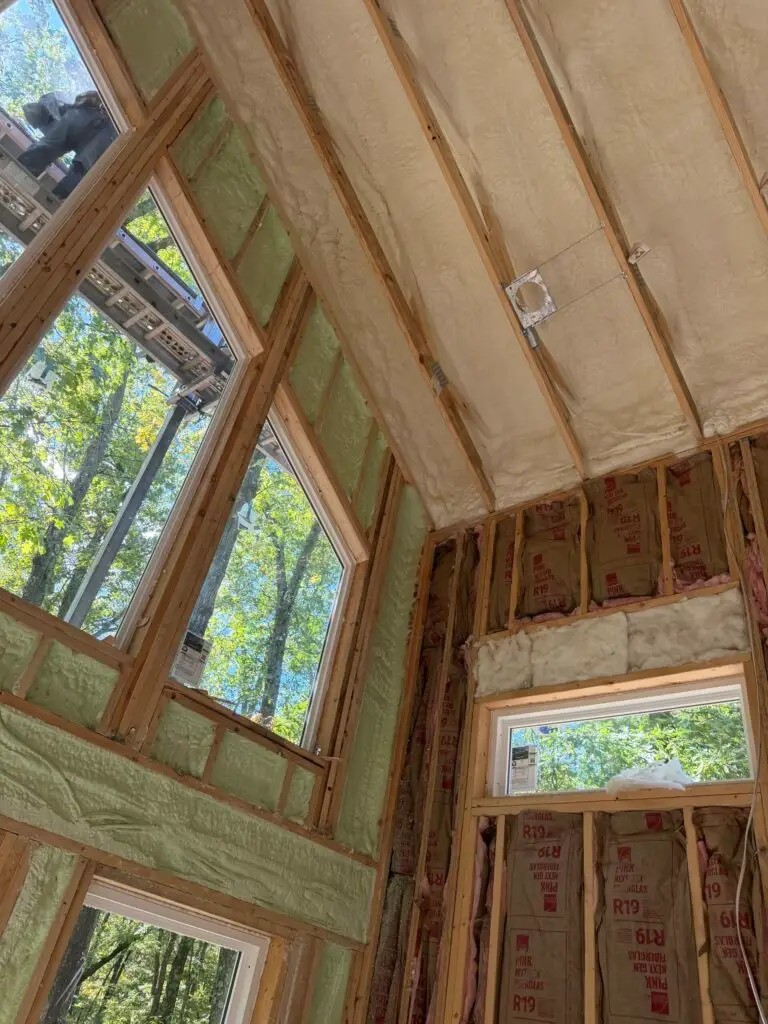
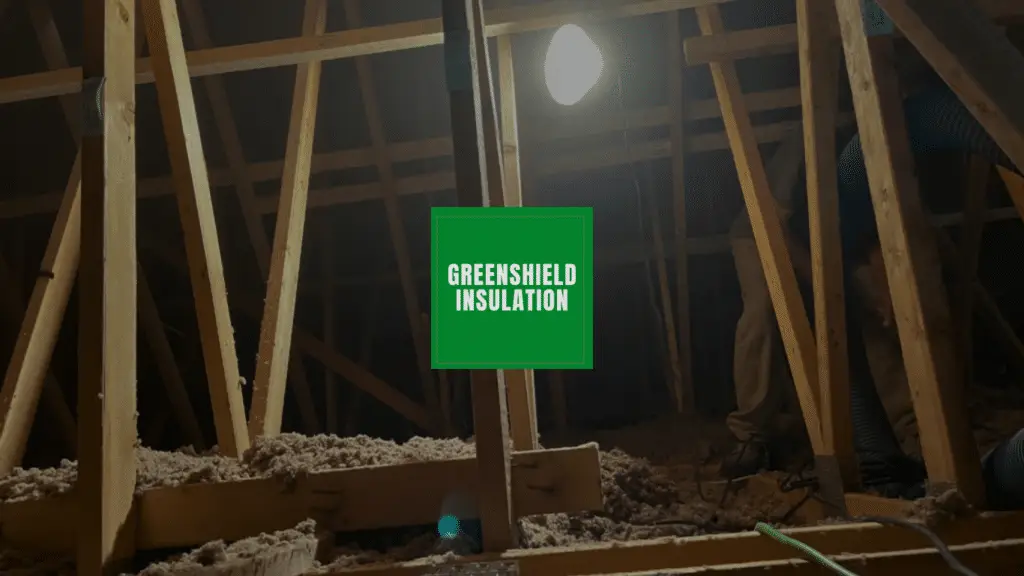
Our project photos show why choosing the right insulation assembly matters. One project features spray foam installed between rafters in a cathedral ceiling; another shows an attic prepared for blown-in insulation with the blowing hose in place. These are different applications, so they should not be compared as though both are standard attic-floor retrofits.
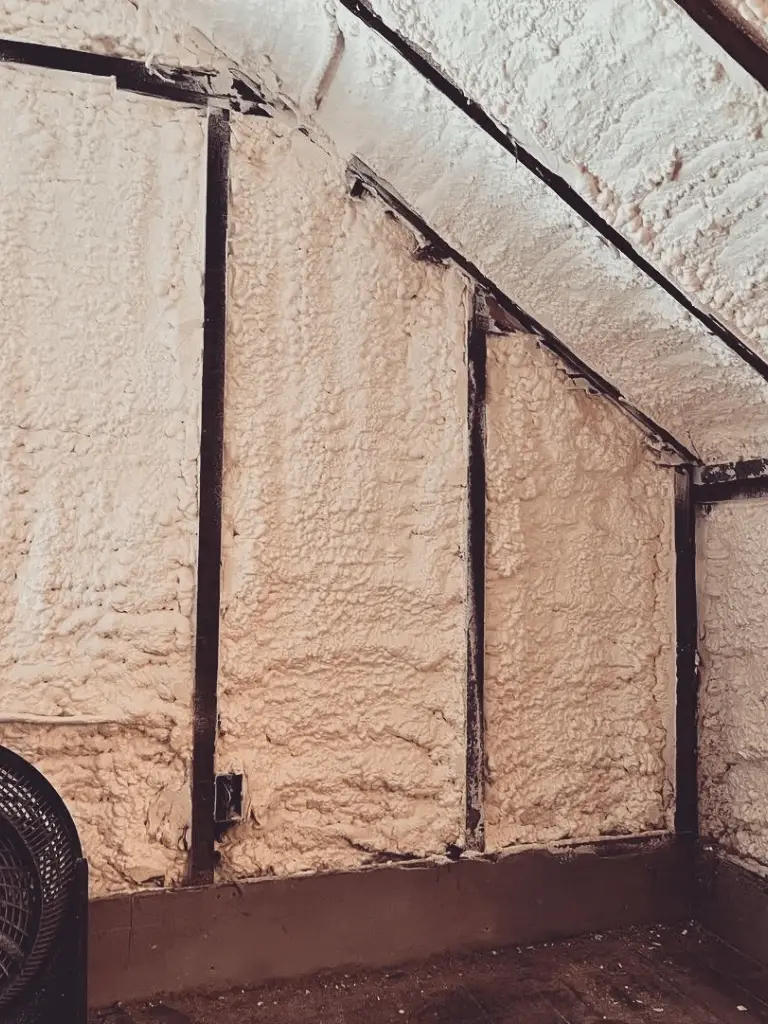
Other project photos show spray foam along a sloped roofline and a mixed insulation assembly with fiberglass batts. The photos illustrate installation methods, but they do not by themselves establish final R-values, code compliance, or long-term performance. View more examples in our Greenshield project gallery.
Frequently asked questions
Is spray foam always better than cellulose?
No. Properly air-sealed and insulated vented attics can perform very well with cellulose. Spray foam has advantages in specific assemblies but usually costs more and requires careful design.
Can cellulose be blown over old attic insulation?
Often, yes, if the existing insulation is dry, stable, and safe to leave in place. Wet, damaged, or contaminated material may need removal first.
Does blown-in cellulose stop air leaks?
No. Cellulose slows heat flow, but major air leaks should be sealed separately before installation.
Should I spray foam the attic floor or the roof deck?
That depends on whether the attic is vented, where the thermal boundary belongs, and the roof assembly. A roof-deck application should not be selected without assessing moisture control and code requirements.
Do you provide estimates in Kalamazoo and Portage?
Yes. Greenshield Insulation is based in Mattawan and serves Kalamazoo, Portage, Paw Paw, and nearby Southwest Michigan communities. Visit our Kalamazoo insulation contractor or Portage insulation pages for local service information.
Get a free attic insulation estimate in Southwest Michigan
Greenshield Insulation is a family-owned insulation contractor serving homeowners throughout the Kalamazoo area. We install blown-in cellulose, open-cell and closed-cell spray foam, and related attic air-sealing and ventilation improvements. We’ll help you choose an approach that fits your home—not just the most expensive product.
Request your free insulation estimate or call 269-743-3121.
Want to see examples of our work and stay updated on local insulation projects? Follow Greenshield Insulation on Facebook and browse our project gallery. Learn more about our family-owned team, read customer reviews, or explore all insulation services.